Christopher Zaab-Yen Abana, PhD

CHRISTOPHER ABANA
Nominated From: University of Michigan
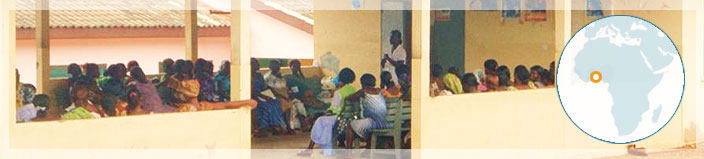
Research Site: University of Ghana
Research Area: HIV
Primary Mentor: Alice Telesnitsky, PhD
Research Project
Screening of Three Novel Latency-Reversing Agents Across Diverse HIV Integration Sites Toward Functional Cure Strategies
Despite the success of antiretroviral therapy (ART), HIV persists in long-lived latent reservoirs of CD4⁺ T cells. These reservoirs are shaped by clonal expansion and integration-site heterogeneity, which dictate proviral expression and reactivation potential. Current latency-reversing agents (LRAs) have limited clinical efficacy because they fail to act broadly across diverse proviral contexts. We have identified three novel LRAs (Abexinostat, Pracinostat, and MC1568) with promising reactivation potential. This project will systematically evaluate their activity across integration sites using a stepwise approach: (1) in vitro screening with a barcoded HIV reporter library, (2) ex vivo validation in resting CD4⁺ T cells from ART-suppressed individuals, and (3) in vivo testing in ART-suppressed humanized mice. By integrating molecular assays, sequencing, and clonal tracking, this project aims to identify an LRA with broad reactivation activity and translational potential. The findings will directly inform cure strategies and provide a scalable pipeline for future candidate evaluation.
Research Significance
My research addresses HIV latency—one of the most critical obstacles to achieving a cure for HIV. Growing up in Ghana, where HIV remains a major public health challenge, I have witnessed firsthand the clinical, social, and economic consequences of lifelong antiretroviral therapy on individuals, families, and health systems. These experiences motivate my commitment to developing innovative strategies that move beyond lifelong treatment toward durable solutions. By identifying compounds that can safely reactivate latent HIV, my work contributes directly to the global pursuit of a functional cure. This research aligns closely with U.S. global health priorities by advancing strategies to reduce the burden of infectious diseases, strengthening international scientific collaboration, and accelerating biomedical innovation with broad public health impact. For U.S. taxpayers, this investment delivers long-term value by helping reduce the global transmission and economic cost of HIV, fostering sustained partnerships between U.S. and African research institutions, and training globally engaged scientists equipped to respond rapidly to emerging health threats. Ultimately, my work transforms international collaboration into shared health security, reinforcing U.S. leadership in global biomedical research.
Publications
Mentors


