
Christine Benderli Nana, PhD

Nominated From: University of Washington
Research Site: University of Yaounde
Research Area: HIV and microbiome
Primary Mentor: Heather B. Jaspan
Research Project
Impact of in utero exposure to HIV on the skin microbial communities of infants during early life
HIV infection affects maternal gut and vaginal microbiota. Maternal microbiota is the primary determinant of infant microbiota. The skin is the largest immune organ in the body. Early-life microbial colonization of the skin is crucial with a long-term impact on epithelial barrier integrity and immunity, and therefore susceptibility to infections and allergic diseases later in life. We propose to investigate the impact of in-utero exposure to maternal HIV on skin microbial succession and barrier integrity in vaginally-delivered infants during the first 3 months of life. We will conduct an observational cohort study in Yaoundé, Cameroon, enrolling 50 mother-infant pairs (25 with and 25 without HIV) at delivery, with follow-up visits at six weeks and three months. For Aim 1 we will determine the skin microbiota of HIV-exposed and uninfected (HEU) versus HIV-unexposed and uninfected (HUU) infants. For this, skin swabs will be collected from two sites (forehead and forearm) for bacterial 16S rRNA sequencing. For Aim 2, we will compare skin barrier integrity assessed using transepidermal water loss (TEWL) and stratum corneum hydration (SCH) measurements between HEU and HUU. We will assess the relationship between skin microbiota and barrier integrity, accounting for maternal HIV viral load and demographic data. By elucidating the relationship between maternal HIV status, neonatal skin microbiome, and barrier function, this highly innovative study may inform interventions to optimize immunity in HEU infants, such as probiotics or prebiotics to promote microbiome balance.
Research Significance
The skin microbiome is integral to maintaining skin barrier and protecting against pathogens. Our study will be of great interest as it will provide information on how in utero exposure to HIV affects the skin microbiome of infants born vaginally, and help in understanding how early microbial environments influence skin health and skin barrier integrity. Findings from this study could inform strategies for modulating the skin microbiome in HIV-exposed infants. This might include interventions such as probiotics or prebiotics to promote a healthier skin microbiome development in HEU newborn, to preserve skin barrier integrity and potentially mitigate some adverse effects associated with skin integrity. Briefly, Power was calculated using the mean and sd of the skin microbiota at birth from infants who did not develop AD. (Shannon 2.6, sd 0.8) (15). We had 90% power to detect a difference of 0.74 with sample sizes of 25 infants per group to detect a 28% difference associated with in utero HIV exposure.
Publications
Mentors
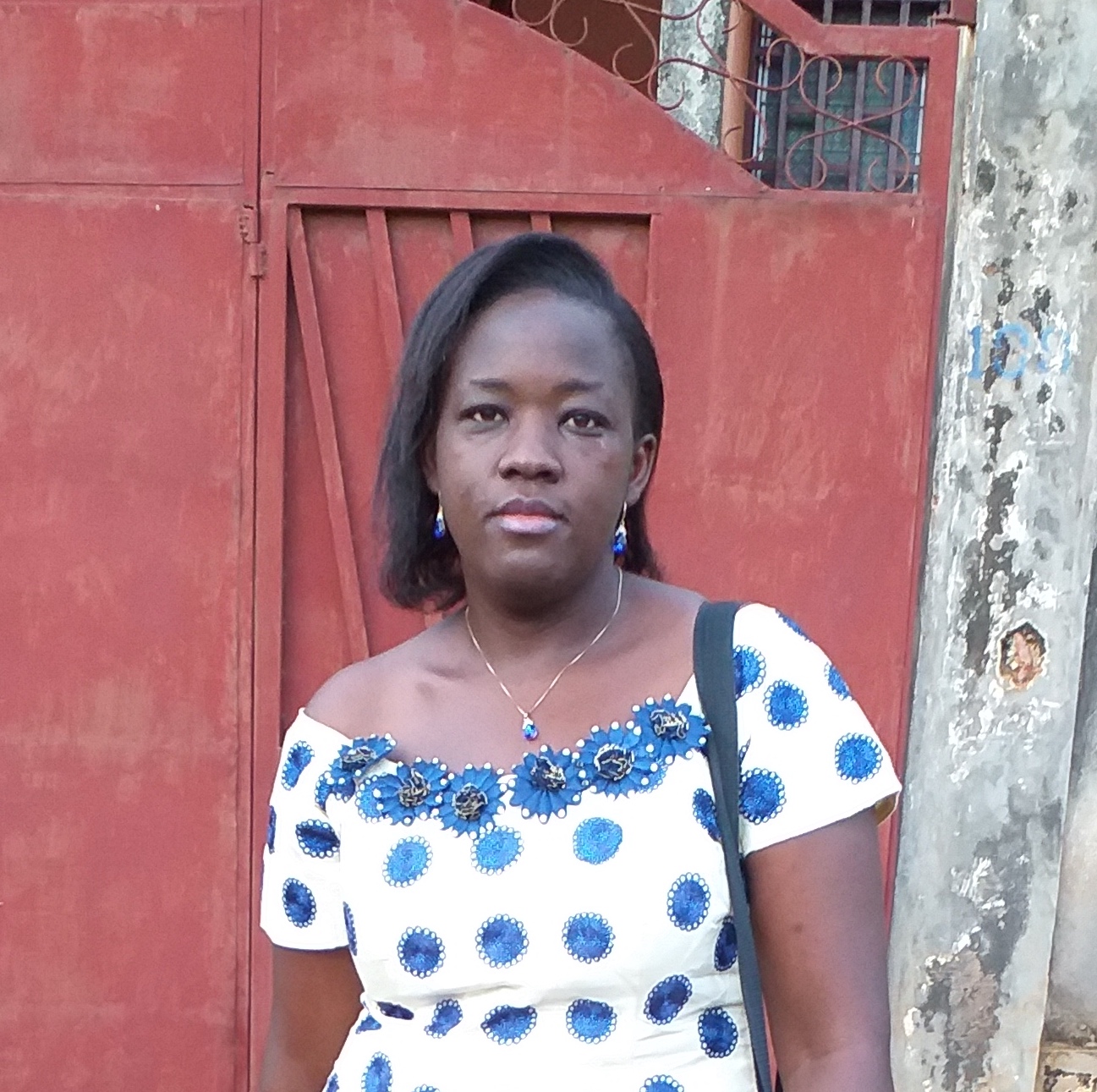
Christine Nana, MSc, PhD(c)
Nominated From: University of Hawai’i
Research Site: University of Yaounde
Research Area: Immunology and Infectious Disease
Primary Mentor: Lishomwa Ndhlovu
Research Project
Effects of HIV-associated immune activation on the skin bacterial microbiota and on the pathogenesis of cutaneous Kaposi’s sarcoma in adults in Cameroon
The Human Immunodeficiency Virus (HIV) is the etiologic agent of Acquired Immune Deficiency Syndrome (AIDS), a deadly disease characterized by a profound upheaval of the immune system and the consequent increased risk of developing opportunistic infectious illnesses and tumors. According to the global HIV and AIDS statistics, HIV continues to be a major global public health issue, having claimed almost 32.7 million lives so far, of which 690000 people in 2019. However, with increasing access to effective HIV prevention, diagnosis, treatment and care, including for opportunistic infections, sub-Saharan Africa still bears the greatest brunt with 470 000 AIDS-related deaths in 2018. In Cameroon, 540,000 peoples were living with HIV in 2018, of which 3.6% were adults aged between 15 and 49 years. That same year, 23,000 new infections were recorded and 18,000 people died from AIDS-related illnesses. There is growing evidence that chronic immune activation and inflammation play an important role in the homeostatic disturbance of several organs, promoting opportunistic infections and certain cancers in people living with HIV on and off antiretrovirals therapy (ART). In-depth studies must therefore be carried out in order to detect certain biomarkers of immune activation which may have an effect on the skin bacterial homeostasis in order to recommend better management and reduce opportunistic infections such as Kaposi sarcoma which is among the main causes of death in people living with HIV. The skin represents the primary interface between the host and the environment. Microbial profiling has revealed the presence of highly diverse commensal communities along distinct topographical skin sites which have an important role in human health and diseases. Recently, it has been reported that gut microbiome is involved in the development of inflammation in HIV infection and there is interaction between the microbiome and systemic immune activation. Opportunistic infections seen in AIDS patients commonly include dermatological conditions, such as Kaposi’s sarcoma (KS) or Candidiasis. However, to our knowledge, no studies have extensively covered the skin microbiome in AIDS patients nor in HIV infected individuals. When searching for the keywords, ” skin microbiome, opportunistic infection and AIDS,” there are only two hits, neither of which are related to microbiome meta-analysis. Our preliminary unpublished data shows significant dysregulation in skin microbiome between HIV positive and negative adults which is further exacerbated in patients with Kaposi sarcoma. Nonetheless, unraveling the implication of immune activation in HIV/AIDS patients could improve our understanding on the risk of developing some skin opportunistic infection like Kaposi sarcoma.
Research Significance
HIV/AIDS is a worldwide public health problem, with significant burden. Our study will be of great interest as it will provide preliminary data on the relationship between skin bacterial microbiota and immune status of HIV-infected people. This will serve to conduct in-depth studies that will aid the identification of biomarkers linked to the risk to develop opportunistic skin diseases in HIV patients.
Publications
Mentors


